 You are viewing the Wilmington, NC location.

If it is time to upgrade to a new furnace, you may be deciding between gas and electric. Both are excellent choices, although they have different pros and cons to consider. The bottom line is that it comes down to your personal preference. However, it is important to make an educated decision – which means understanding the basics of each option.
You can keep reading to learn more about the key differences between gas and electric furnaces. Then when you’re ready, you can give our team a call for your in-home assessment for installation. We can help answer any additional questions you have and help you choose a furnace installation Wilmington, NC that best fits your family’s needs.
What is an HVAC heat pump and how does it compare to gas heating?
An HVAC heat pump uses electricity to transfer heat rather than create it, providing both heating and cooling from one system. Compared to gas furnaces, heat pumps are typically more energy-efficient, safer to operate, and better for mild to moderate climates, while gas heating may perform better in prolonged extreme cold.
Gas Furnace Pros and Cons for Home Heating
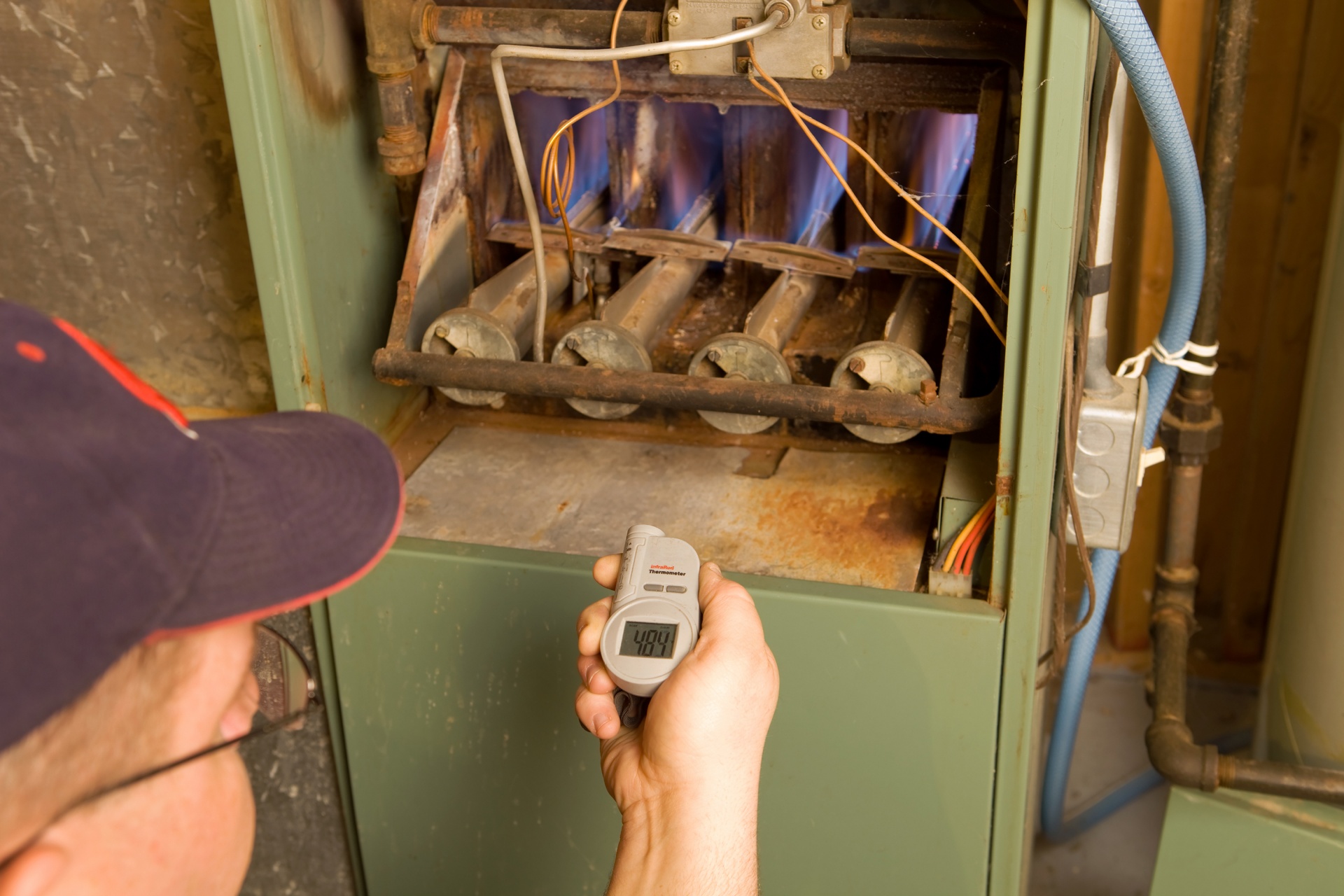
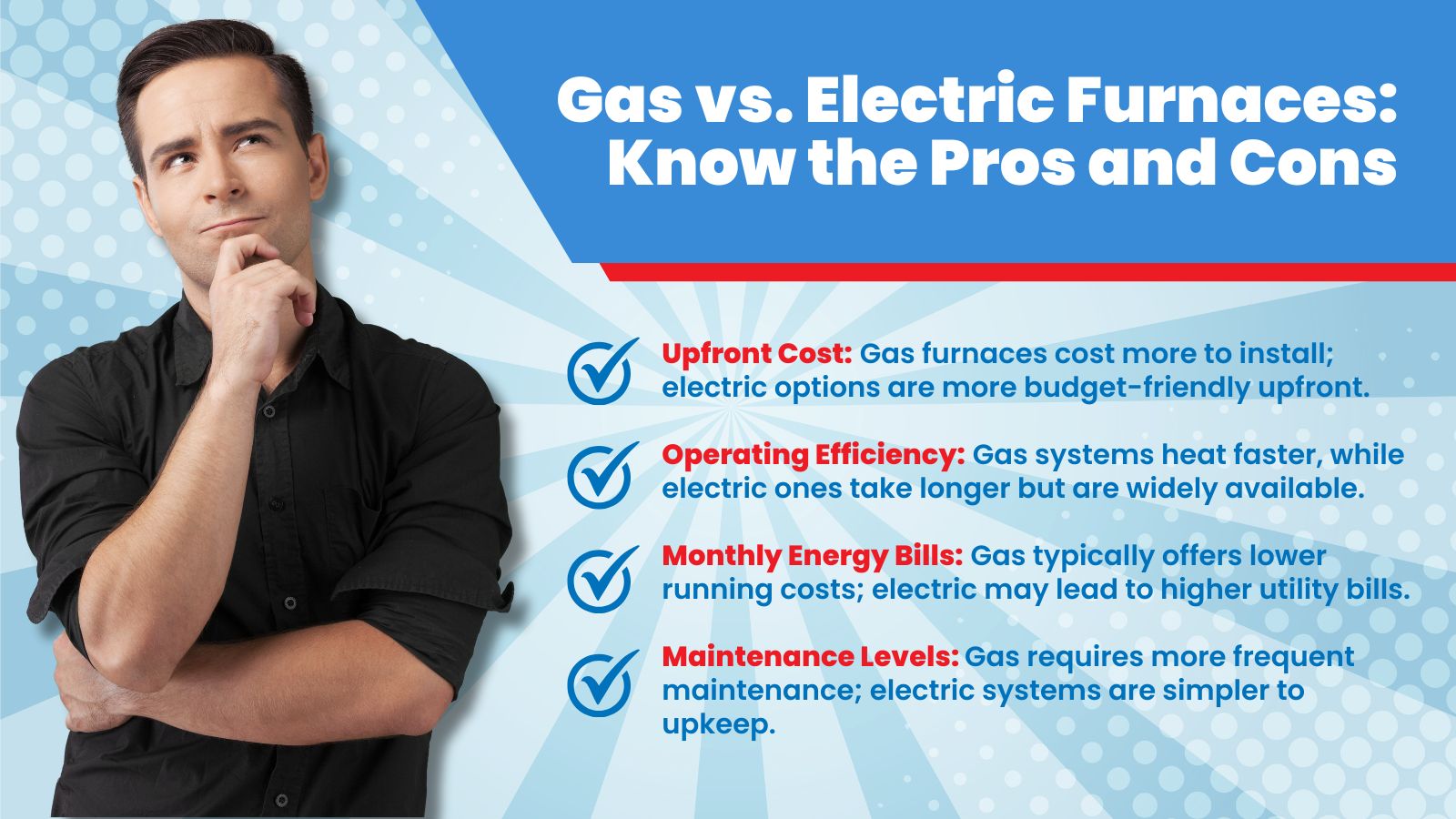
Gas furnaces are a very popular choice because they heat up so quickly. Gas furnaces use a pilot light to ignite gas that is released into an airtight chamber. This combustion process creates a high level of heat in a short amount of time. This means that a gas furnace does not have to stay on as long or consume more energy in order to heat your home.
The downside to consider is that gas furnaces can cost more upfront for installation. The reason for this is that there are more safety components required because of the combination of an open flame and gas. The systems can also require a little more maintenance compared to an electric furnace because of the nature of how they operate.
Electric Furnace Advantages and Disadvantages
If you’re looking to save money upfront for the installation of your new heating system, an electric furnace is the way to go. Electric furnaces are more affordable to install compared to gas options. The downside is that electric furnaces do take longer to heat up and consume more energy as a result.
You’ll likely spend more to heat your home with an electric furnace, so you have to decide if the upfront savings are worth the extra you’ll pay from month to month. Lower overall maintenance expectations can also help to balance out the cost. You do have to schedule annual maintenance for your furnace.
However, an electric furnace may not require as many maintenance steps. This can mean that you save money over having to make more involved or frequent repairs with a gas furnace. Plus, electric furnaces are more widely available since they only require electricity. If you don’t have gas service availability, an electric furnace may be your only option.
Energy Efficiency Comparison: Gas vs Electric Heating
Gas furnaces receive an AFUE rating that estimates overall efficiency. If you go with a gas furnace, be sure to invest in a high-efficiency model. This can boost your energy savings and lighten the load on your unit since it won’t have to work as hard to produce results.
Frequently Asked Questions
Question: What is the main difference between gas and electric heating systems?
Answer: Gas heating systems use natural gas to generate heat through combustion, which typically provides faster and stronger heat output. Electric heating systems convert electricity into heat, offering quieter operation and simpler installation, but they usually heat more slowly and can cost more to operate long term.
Question: Is gas or electric heating cheaper to run in the long term?
Answer: Gas heating is generally cheaper to operate because natural gas often costs less than electricity for the same amount of heat. Although gas systems may cost more upfront, their lower monthly operating costs can make them more affordable over time, especially in colder climates.
Question: Which heating option has lower installation and maintenance costs?
Answer: Electric heating systems usually have lower installation costs because they do not require gas lines or ventilation. They also tend to need less maintenance since there is no combustion process, fewer moving parts, and reduced risk of mechanical wear compared to gas furnaces.
Question: Is gas heating safe for residential homes?
Answer: Gas heating is safe when properly installed and maintained by professionals. Modern systems include safety controls that manage gas flow and combustion. Routine inspections and maintenance are important to prevent issues such as leaks or carbon monoxide exposure.
Question: How does climate affect the choice between gas and electric heating?
Answer: Climate plays a major role in choosing a heating system. Gas heating is often better suited for colder regions because it delivers consistent, high heat output. Electric heating can be effective in milder climates where heating demands are lower and extreme cold is less common.
At Gideon Heating & Air Conditioning, we like to say that our work isn’t just good—it’s Gideon Guaranteed! Contact us today to schedule furnace installation in Wilmington, NC.